

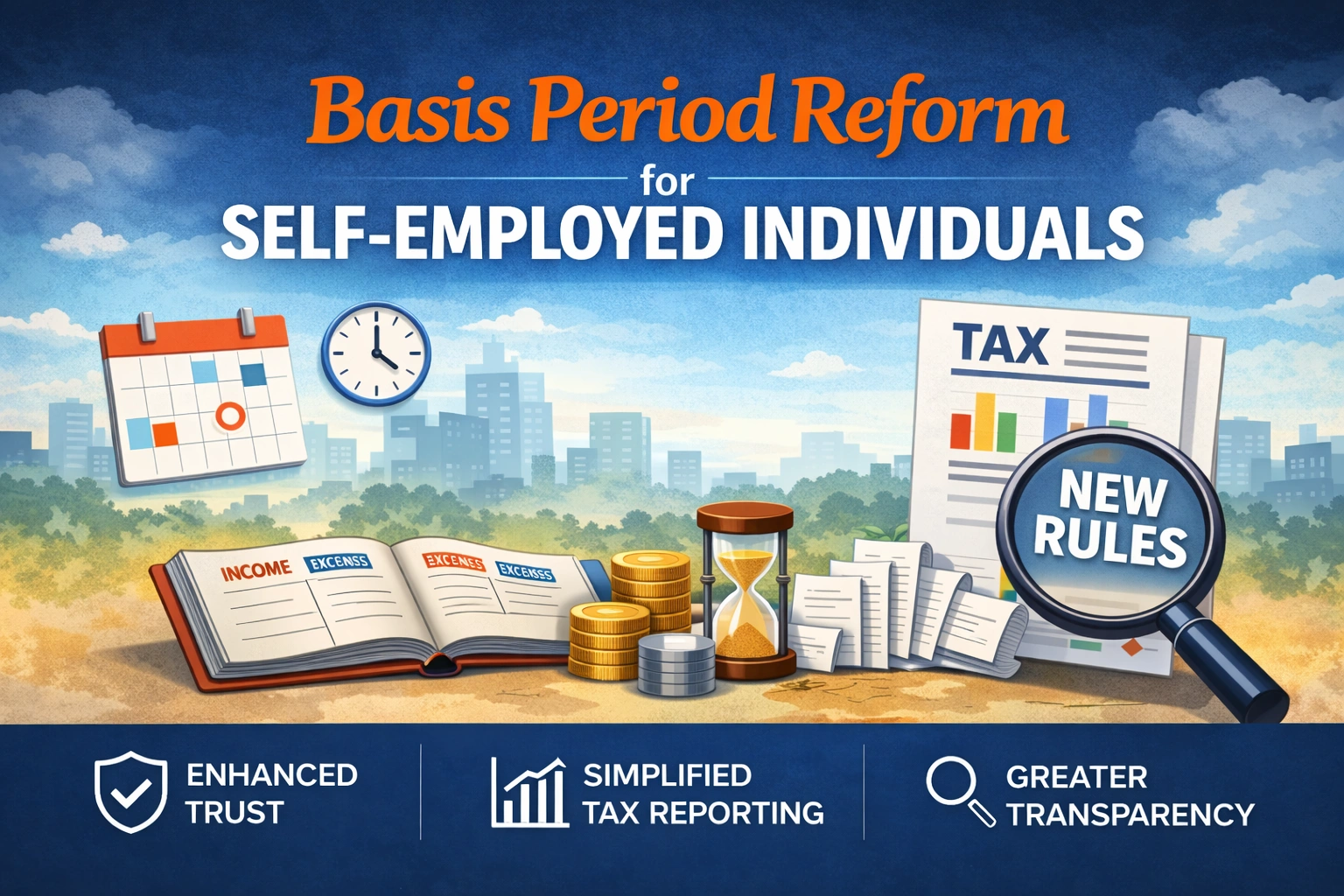
Basis Period Reform UK represents a significant change in how self-employed individuals and partnerships are taxed. Introduced by HMRC, the reform replaces the previous “basis period” system with a tax year basis, aligning business profits directly with the UK tax year.
This change affects how profits are calculated, reported, and taxed, particularly for businesses that do not prepare accounts to 31 March or 5 April. Understanding the reform is essential to ensure compliance and avoid errors in Self Assessment.
What Is Basis Period Reform UK?
Basis Period Reform UK changes how trading income is allocated to tax years. Under the previous system, businesses were taxed based on their accounting year-end, known as the “current year basis.”
Under the new system, all self-employed individuals and partnerships are taxed on profits arising within the tax year (6 April to 5 April), regardless of their accounting date.
This reduces the need for complex basis period rules and ensures that taxable income reflects profits earned during the tax year.
Why the Reform Has Been Introduced
The reform was introduced to simplify the taxation of trading income and improve fairness across businesses. Previously, businesses with different accounting dates could report significantly different taxable profits for the same tax year.
The new approach creates consistency by aligning trading income with other forms of personal income, such as employment and investment income, which are already taxed on a tax year basis.
It also reduces complications such as overlap profits, which arose primarily in the opening years of trading when profits could be taxed twice due to the interaction of basis periods.
Who Is Affected by the Basis Period Reform in the UK?
Basis Period Reform UK applies to:
- Sole traders
- Partners in partnerships
- Other unincorporated businesses
It mainly affects businesses that prepare accounts to a date other than 31 March or 5 April. Limited companies are not affected, as they follow separate corporation tax rules.
When the New Rules Apply
The transition to the new system took place in the 2023/24 tax year, with the tax year basis fully applying from 2024/25 onwards.
During the transition year, businesses were required to align their profits with the tax year, which could result in more than 12 months of profits being taxed in a single year.
How Basis Period Reform UK Works in Practice
Under the new rules, businesses must calculate their profits based on the tax year rather than their accounting year-end. This may require apportioning profits from different accounting periods.
For example, if a business has a year-end that does not align with the tax year, it may need to combine profits from multiple accounting periods to calculate its taxable income.
This approach ensures that all income is taxed in the correct tax year, regardless of when accounts are prepared.
Overlap Relief and Transition Adjustments
Under the previous system, some businesses generated overlap profits, where income was taxed twice in the early years of trading. These amounts could be carried forward as overlap relief.
Basis Period Reform UK allows businesses to use any remaining overlap relief during the transition to the new system, reducing the impact of increased taxable profits.
In some cases, additional profits arising in the transition year can be spread over multiple years to reduce the immediate tax burden.
Practical Considerations for Businesses
Basis Period Reform UK introduces several practical challenges, particularly for businesses with non-standard accounting dates:
- Need to apportion profits across tax years
- Use of provisional or estimated figures
- Potential amendments once final accounts are prepared
- Cash flow impact due to accelerated tax liabilities
Maintaining accurate and up-to-date records is essential. Fingdom supports businesses through
Accounting & Bookkeeping,
Management Accounting, and
Taxation services.
What Should You Do Now?
1. Review Your Accounting Year End
Consider whether aligning your accounts with the tax year would simplify compliance.
2. Identify Overlap Relief
Ensure any overlap profits are correctly identified and utilised.
3. Strengthen Record-Keeping
Accurate bookkeeping is essential for correct reporting.
4. Plan for Cash Flow
Assess the impact of timing differences on tax payments.
5. Seek Professional Advice
Professional support can help manage the transition effectively. Visit our
Personal Tax and
Taxation services.
Why Choose Fingdom?
Fingdom Financial Consultants provides expert support in tax compliance, accounting, and financial reporting. We help self-employed individuals and partnerships navigate regulatory changes with confidence.
Learn more About Us, meet Our Team, or read Client Testimonials.
Final Thoughts
Basis Period Reform UK is a major structural change in the taxation of self-employed profits. While it simplifies the system in the long term, the transition requires careful attention and planning.
Understanding the Basis Period Reform in the UK is essential for ensuring accurate reporting, maintaining compliance, and supporting better financial decision-making.
FAQs on Basis Period Reform UK
Does the reform affect limited companies?
No, it applies only to self-employed individuals and partnerships.
Do I need to change my accounting year end?
Not always, but aligning with the tax year may simplify compliance.
Will my tax increase?
In the transition year, some businesses may experience higher taxable profits depending on their accounting period.
Need Expert Support?
Fingdom Financial Consultants supports self-employed individuals and partnerships with tax compliance and reporting requirements.
Phone: +44 7383 032573
Consultation: Book a consultation
Reviews: View our Google reviews
Fingdom Financial Consultants Ltd
Chartered Accountants
140 High Road, South Woodford, London E18 2QS
Phone: +44 7383 032573
Website: fingdom.uk
Note:


Leave A Comment